Deprecated: Function WP_Dependencies->add_data() was called with an argument that is deprecated since version 6.9.0! IE conditional comments are ignored by all supported browsers. in /home/hellotelanganasp/public_html/wp-includes/functions.php on line 6130
Skip to content
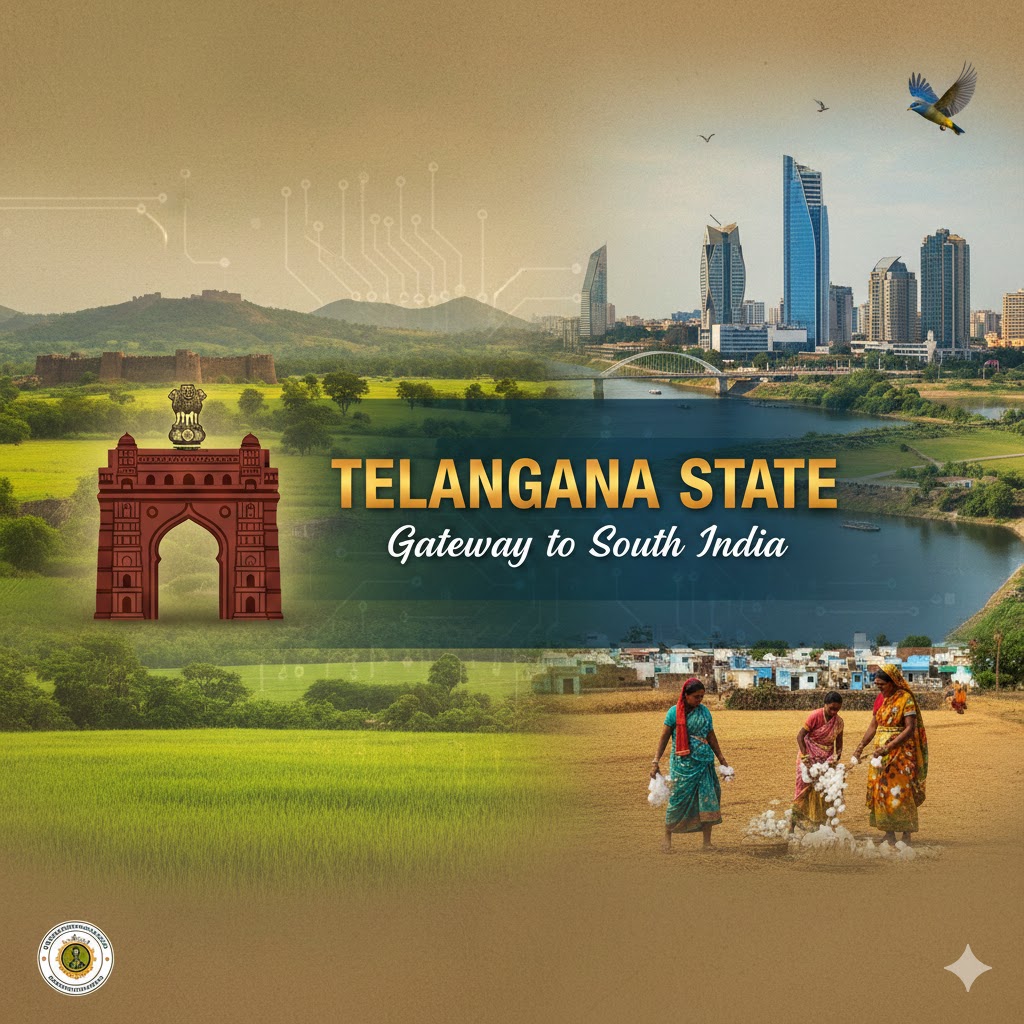
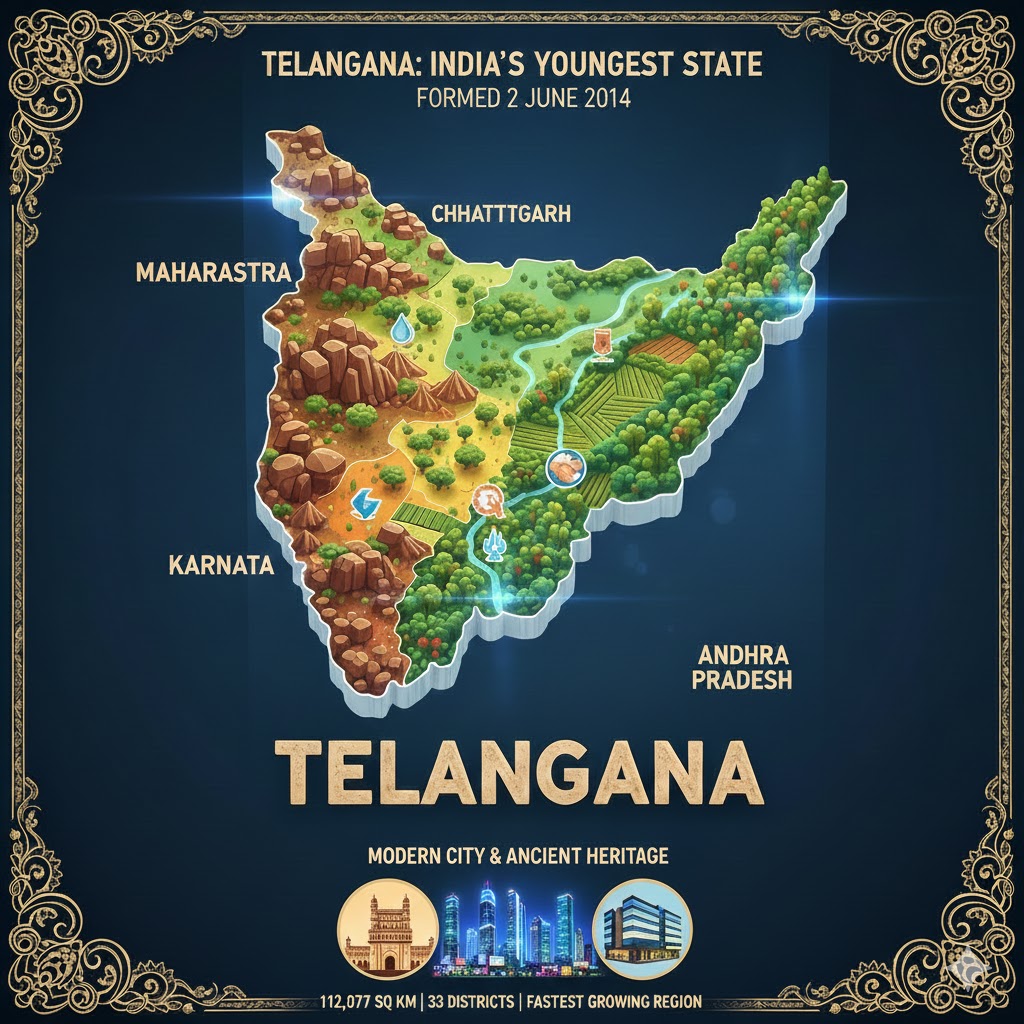
Telangana, the youngest state of India, was officially formed on June 2, 2014, after being separated from Andhra Pradesh. Located in the heart of the Deccan Plateau, Telangana is a land of rich heritage, diverse culture, and rapid development. The state’s capital, Hyderabad, is one of India’s leading IT hubs, known for its unique blend of history and innovation.
Introduction & Formation
The Newest State: Briefly mention its formation as the 29th (now 28th) state of India on June 2, 2014, separating from Andhra Pradesh.
The Deccan Identity: Position Telangana as the heart of the Deccan Plateau, known for its unique blend of North and South Indian cultures, often referred to as Ganga-Jamuna Tehzeeb.
Capital: Highlight Hyderabad as the capital—a metropolis where historic grandeur meets the tech-age.
Historical Legacy
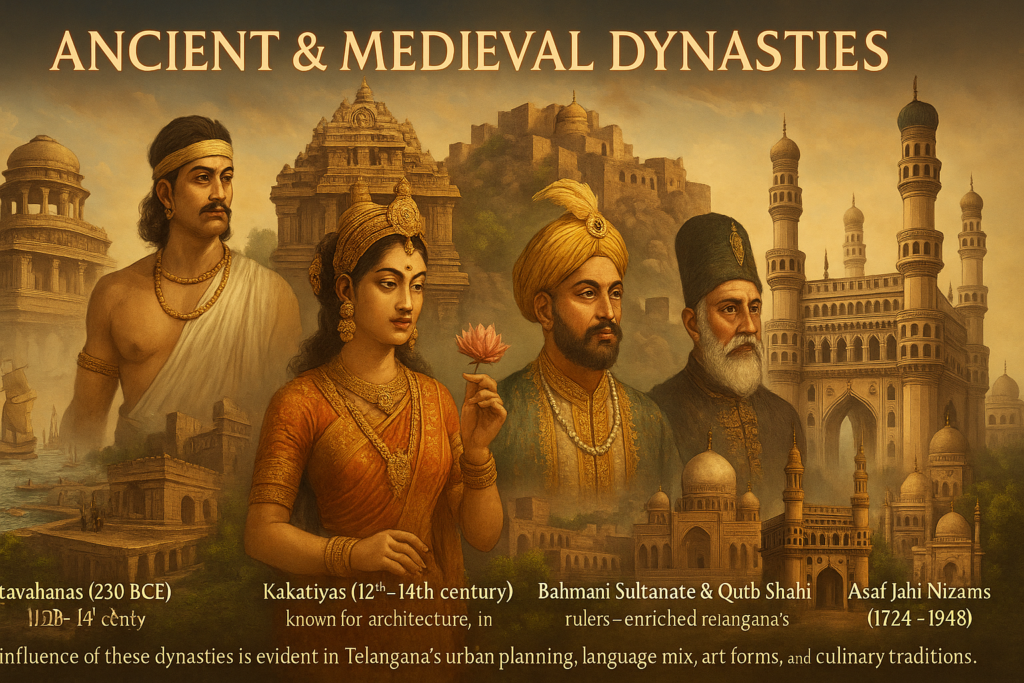
Telangana’s history spans more than 2,500 years, shaped by powerful dynasties that contributed to its culture, economy, architecture, administration, and social systems. The region evolved as a strategic inland trade route, artistic centre, and later an urban hub blending ancient heritage with modern transformation.
Ancient & Medieval Dynasties Satavahanas (230 BCE) – established trade routes and cultural foundations.
Kakatiyas (12th–14th century) – known for architecture, irrigation tanks, engineering, and governance.
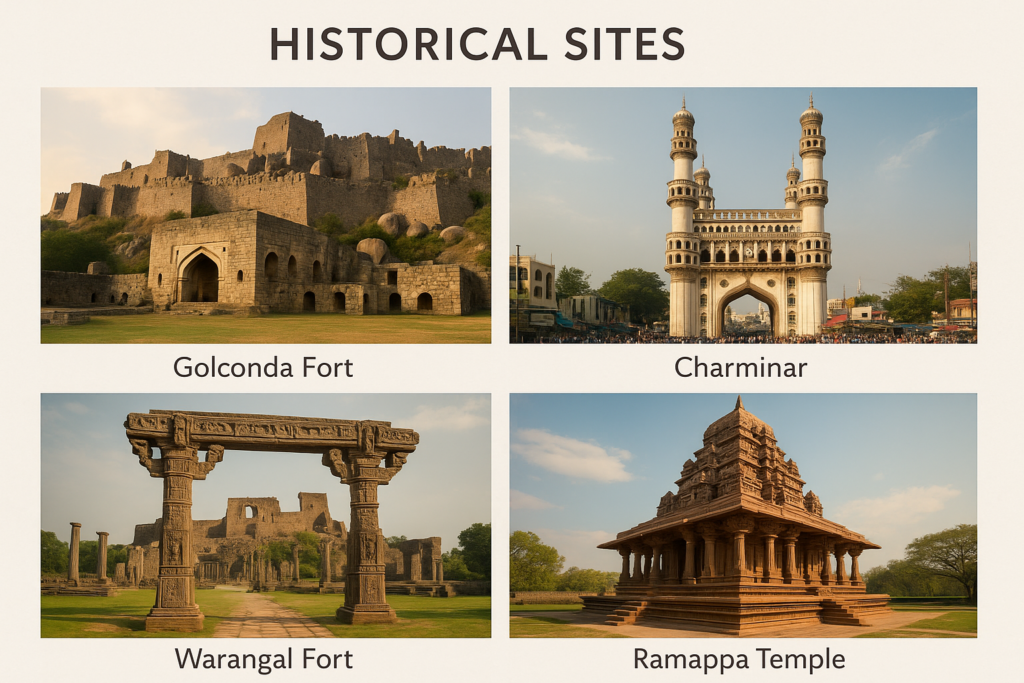
Bahmani Sultanate & Qutb Shahi rulers – enriched Telangana’s Indo-Persian culture and built monumental structures like Golconda Fort.
Asaf Jahi Nizams (1724–1948) – transformed Hyderabad into a global center of architecture, education, and commerce.
Geography & Climate
Telangana is located in the Deccan Plateau, bordered by:
Maharashtra (North & Northwest)
Chhattisgarh (North)
Andhra Pradesh (South & East)
Karnataka (West)
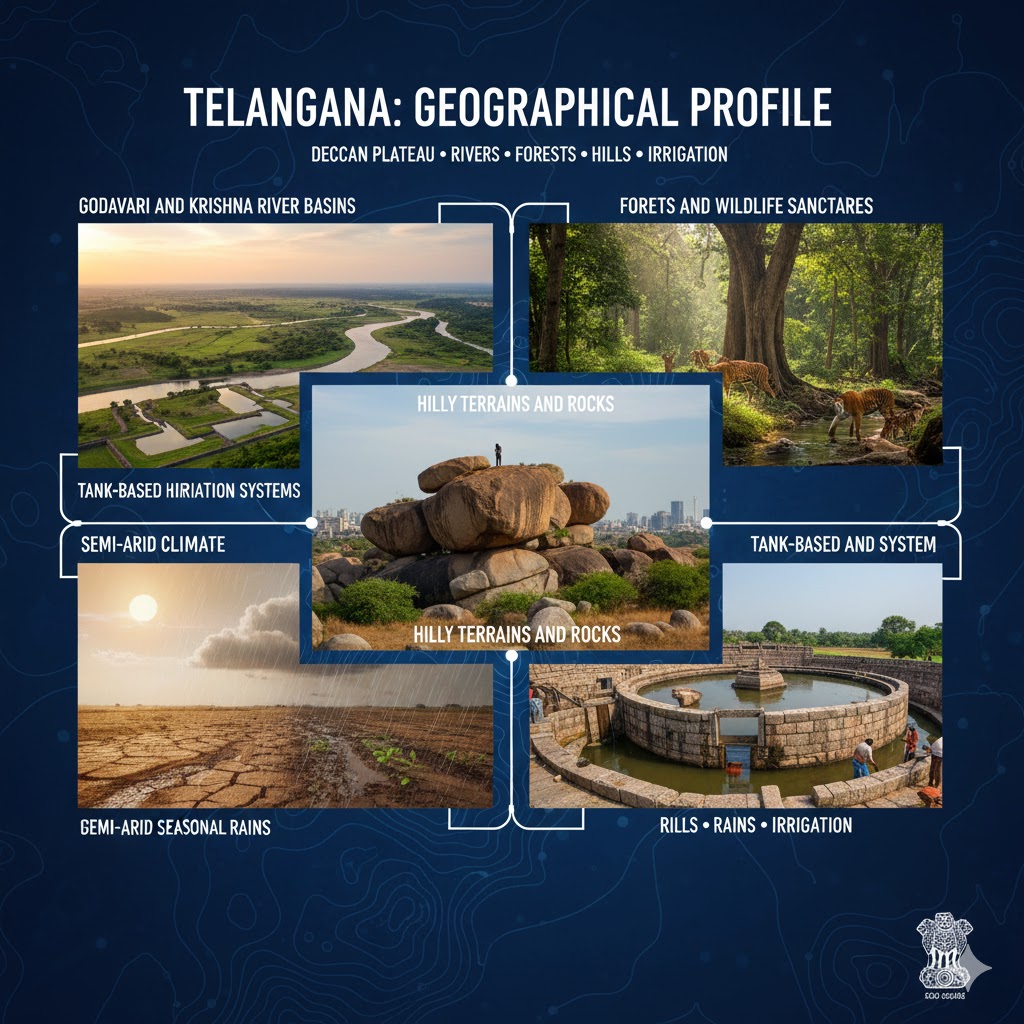
The terrain includes river basins, black soil fields, rocky landscapes, and forest zones. The state enjoys a semi-arid climate, receiving rainfall through Southwest monsoon, with hot summers and mild winters.
Demographics & Culture
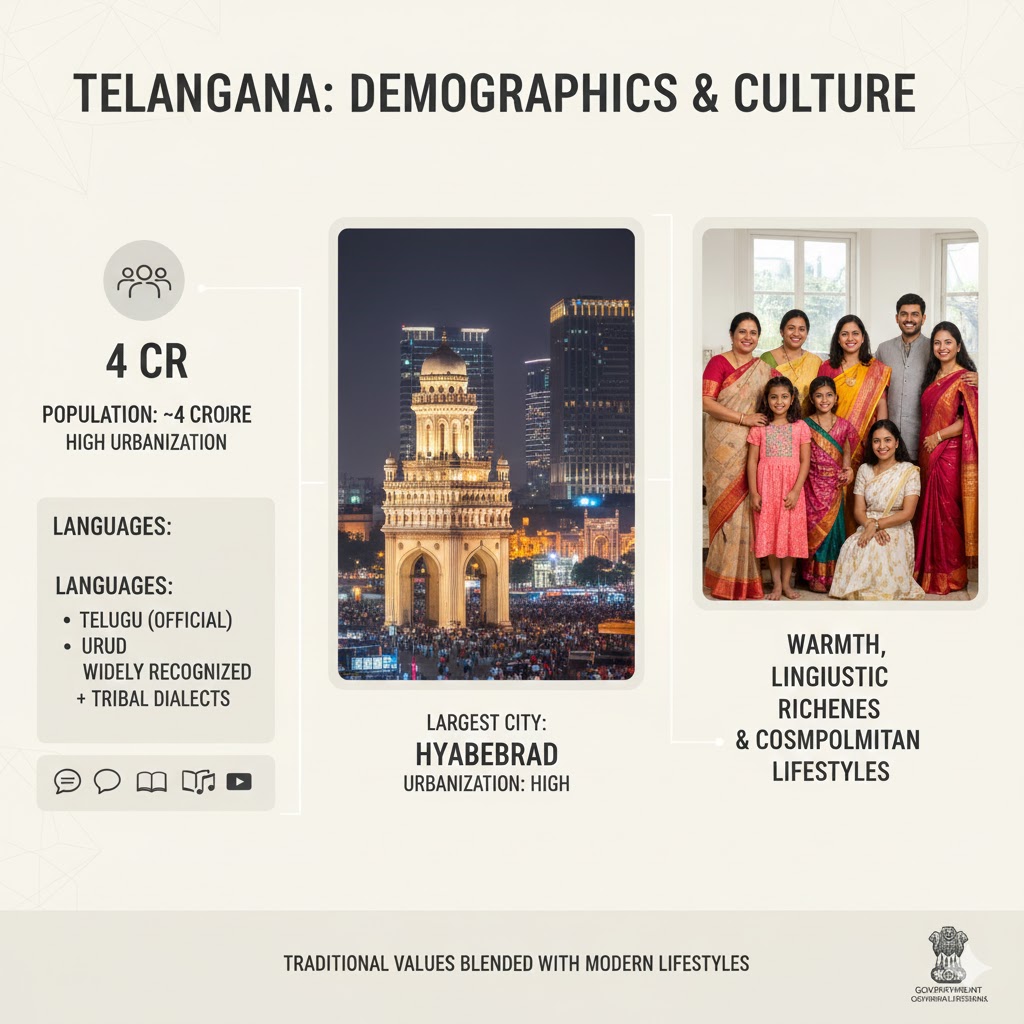
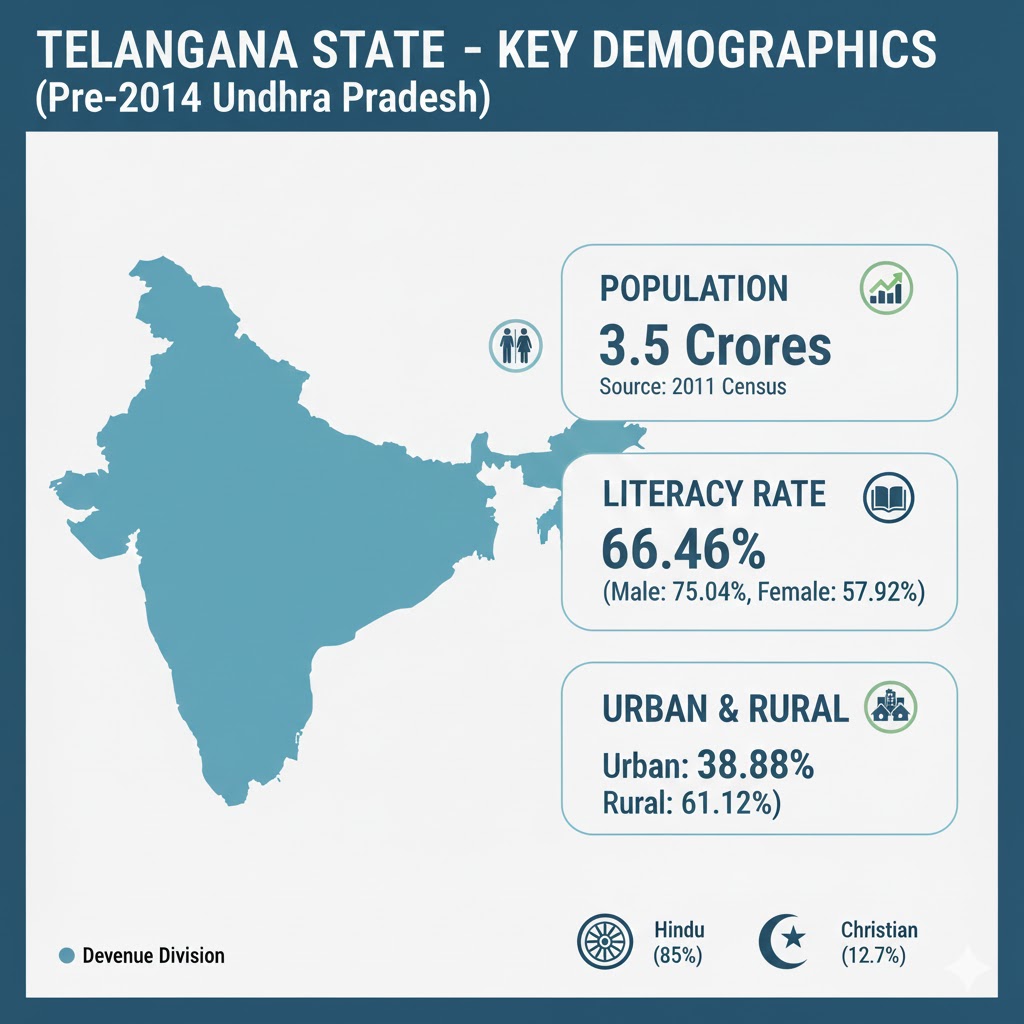
Population: ~4 Crore
Largest city: Hyderabad
Urbanization: One of the highest among Indian states
Languages: Telugu (official), Urdu (widely recognized), and tribal dialects
People here are known for their warmth, linguistic richness, and traditional values blended with cosmopolitan lifestyles.
Governance & Political Structure
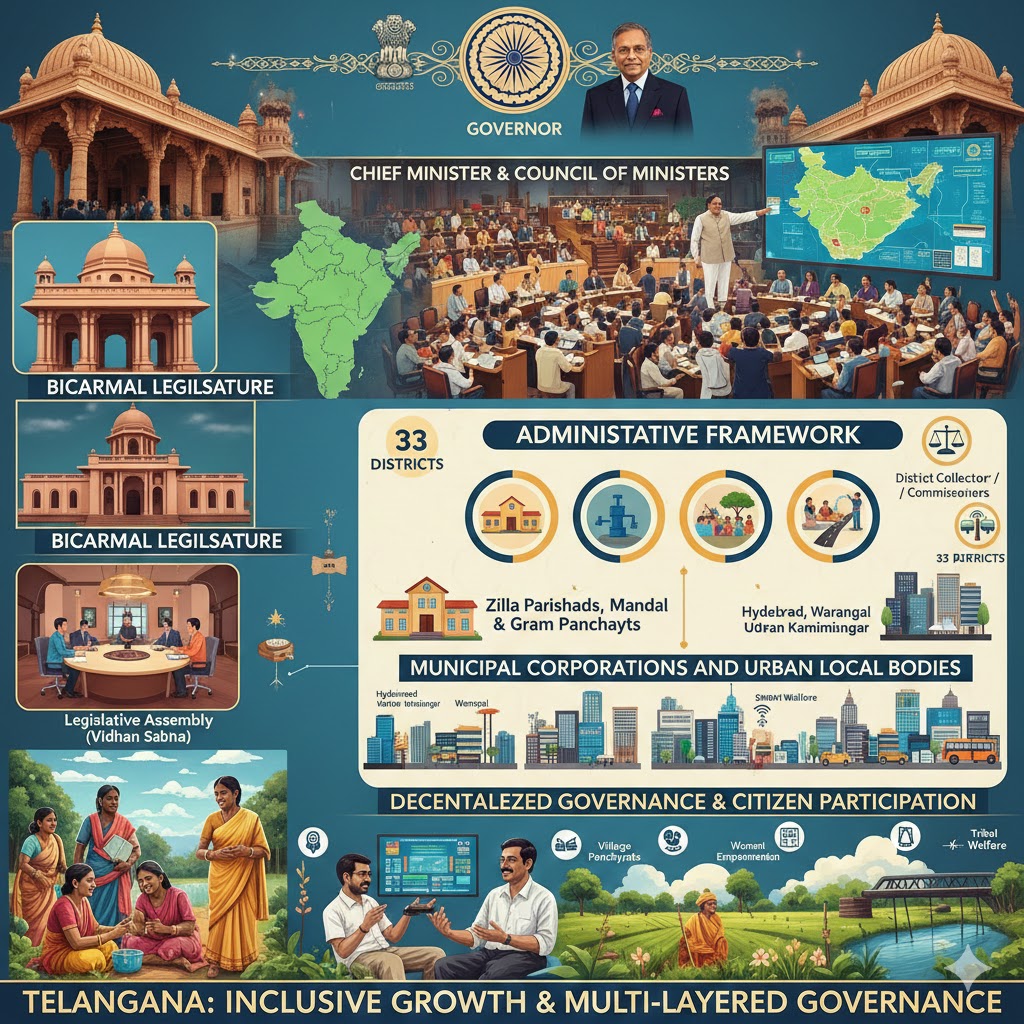
Telangana functions through a well-defined democratic framework where the Governor serves as the constitutional authority, and real executive power rests with the Chief Minister and Council of Ministers who steer administration, development, and policy implementation. The bicameral legislature, consisting of the Legislative Assembly and Legislative Council, undertakes lawmaking, budget approvals, and oversight of governance. Administratively, the state is divided into 33 districts with district collectors coordinating revenue, disaster management, social welfare, and development programs. Telangana strongly promotes decentralization through village panchayats, mandal and zilla parishads, and municipal bodies, ensuring citizens participate in planning and decision-making. Initiatives such as Palle Pragathi, Pattana Pragathi, MeeSeva digital services, grievance redressal systems, and welfare schemes strengthen local self-governance. This structure promotes transparency, accountability, service delivery efficiency, and balanced economic growth between rural and urban regions, making governance more inclusive and citizen-centric.
Economic Growth & Business Ecosystem
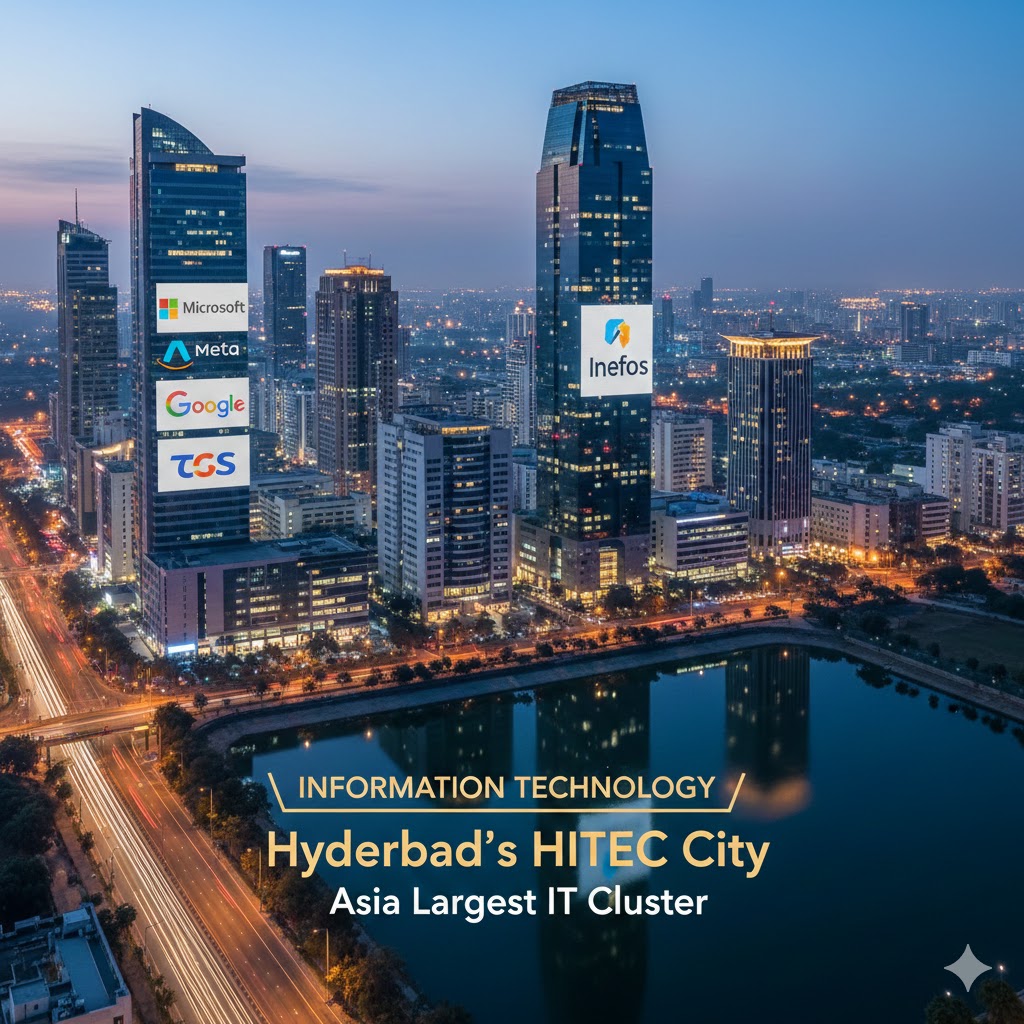
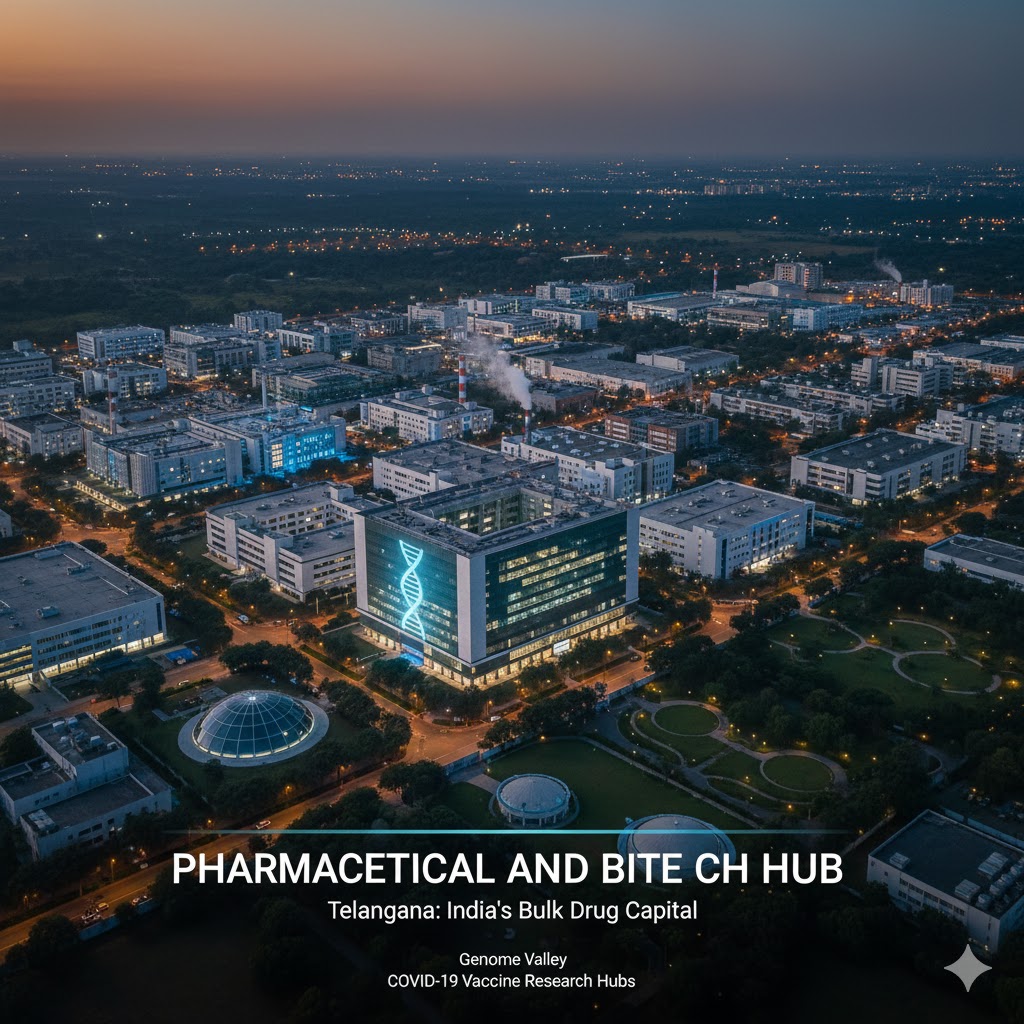
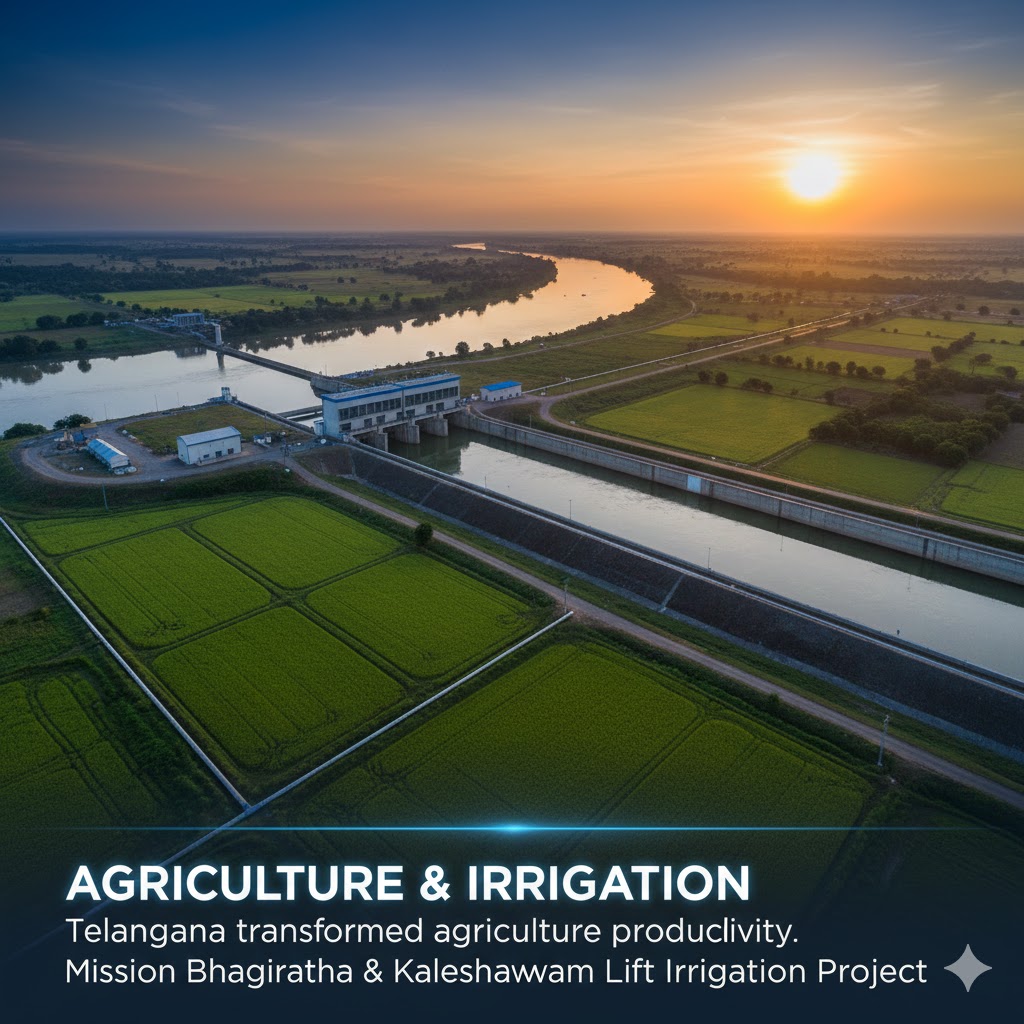
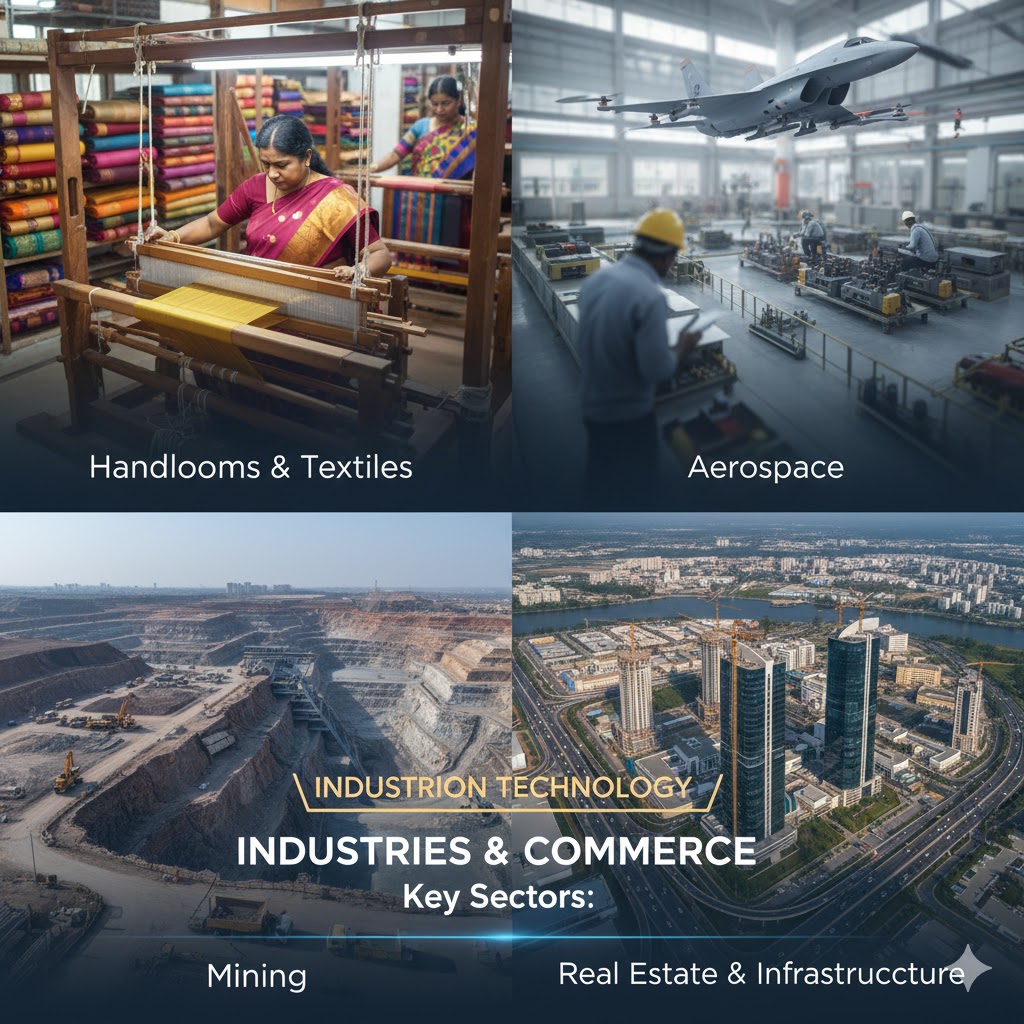
Telangana has rapidly evolved into one of India’s strongest economic powerhouses, driven by innovation-led governance and sectoral diversification. It is widely regarded as the bulk drug and vaccine capital of India, hosting large-scale pharmaceutical clusters and world-class biotech ecosystems like Genome Valley, Hyderabad Pharma City, and Medical Devices Park, which attract global companies and cutting-edge research in life sciences. The state’s agricultural sector has undergone major transformation through initiatives such as Mission Bhagiratha for universal drinking water access, Rythu Bandhu for farmer financial support, and the Kaleshwaram Lift Irrigation Project, one of the world’s largest multi-stage irrigation systems that revitalized groundwater and crop productivity. Telangana’s industrial profile extends beyond farming and pharma—its handlooms and textile clusters, aerospace manufacturing hubs, mining belts, information technology sector, real estate corridors, logistics infrastructure, and renewable energy parks contribute significantly to the economy. Strategic policies, such as TS-iPASS for fast industrial clearances, proactive foreign investment promotion, and world-class industrial parks, continue to position Telangana as a magnet for capital, exports, employment, and technological leadership, making it one of India’s most future-ready states.
Social Welfare & Development Initiatives
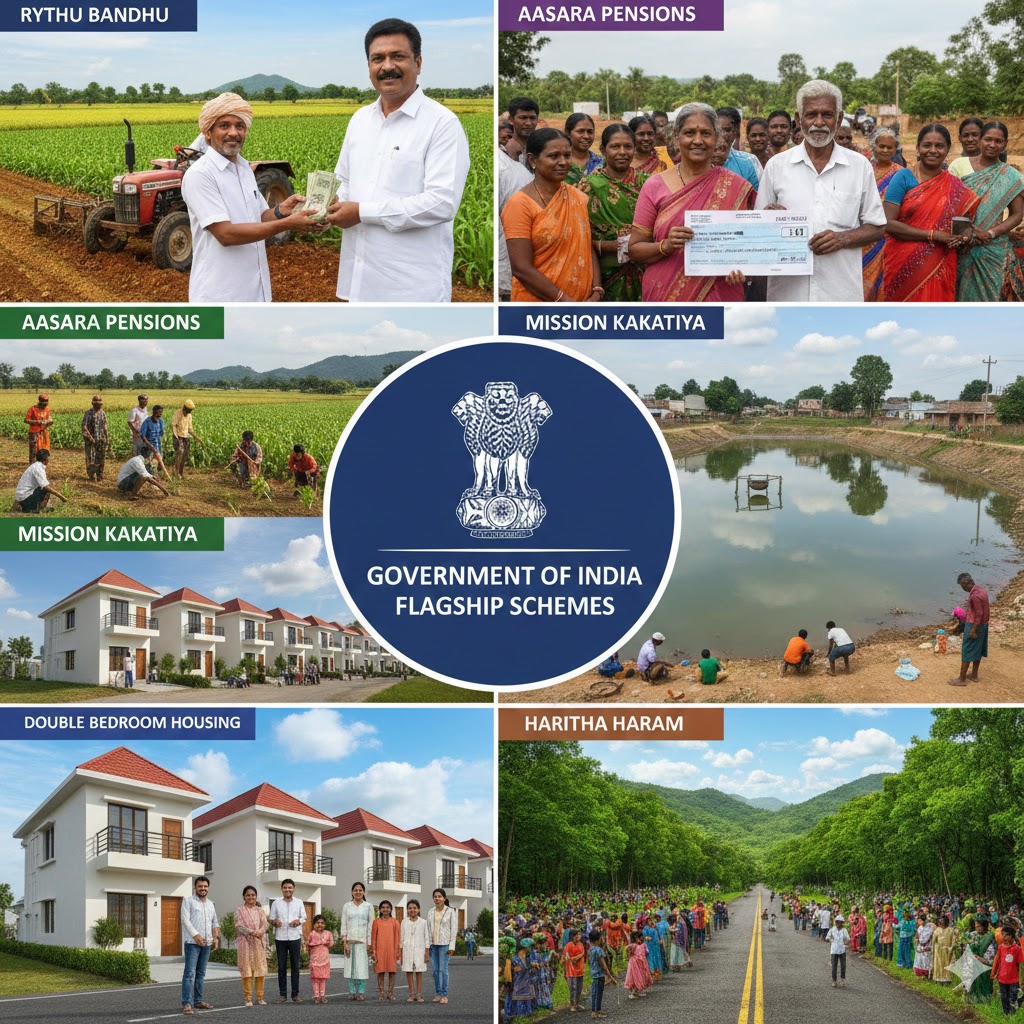
The government has launched several flagship schemes like:
Rythu Bandhu (farmer investment support)
Aasara Pensions
Mission Kakatiya for tank restoration
Haritha Haram (large-scale plantation drive)
Double bedroom housing for the poor.
Telangana has built a strong welfare ecosystem through pioneering flagship schemes aimed at improving livelihoods, social security, and environmental sustainability. Rythu Bandhu provides direct investment support to farmers, making Telangana one of the first states to institutionalize income-based agricultural assistance. Aasara Pensions offers financial security to vulnerable groups including the elderly, widows, differently-abled individuals, and single women. Large-scale sustainability programs like Mission Kakatiya focus on restoring the state’s traditional tanks, improving irrigation, groundwater recharge, and rural incomes. Haritha Haram, one of India’s biggest afforestation drives, enhances green cover, biodiversity, and climate resilience. The state has also implemented double-bedroom housing schemes for economically weaker sections, ensuring dignified living conditions. Together, these schemes promote inclusive growth, rural empowerment.
Education & Knowledge Capital
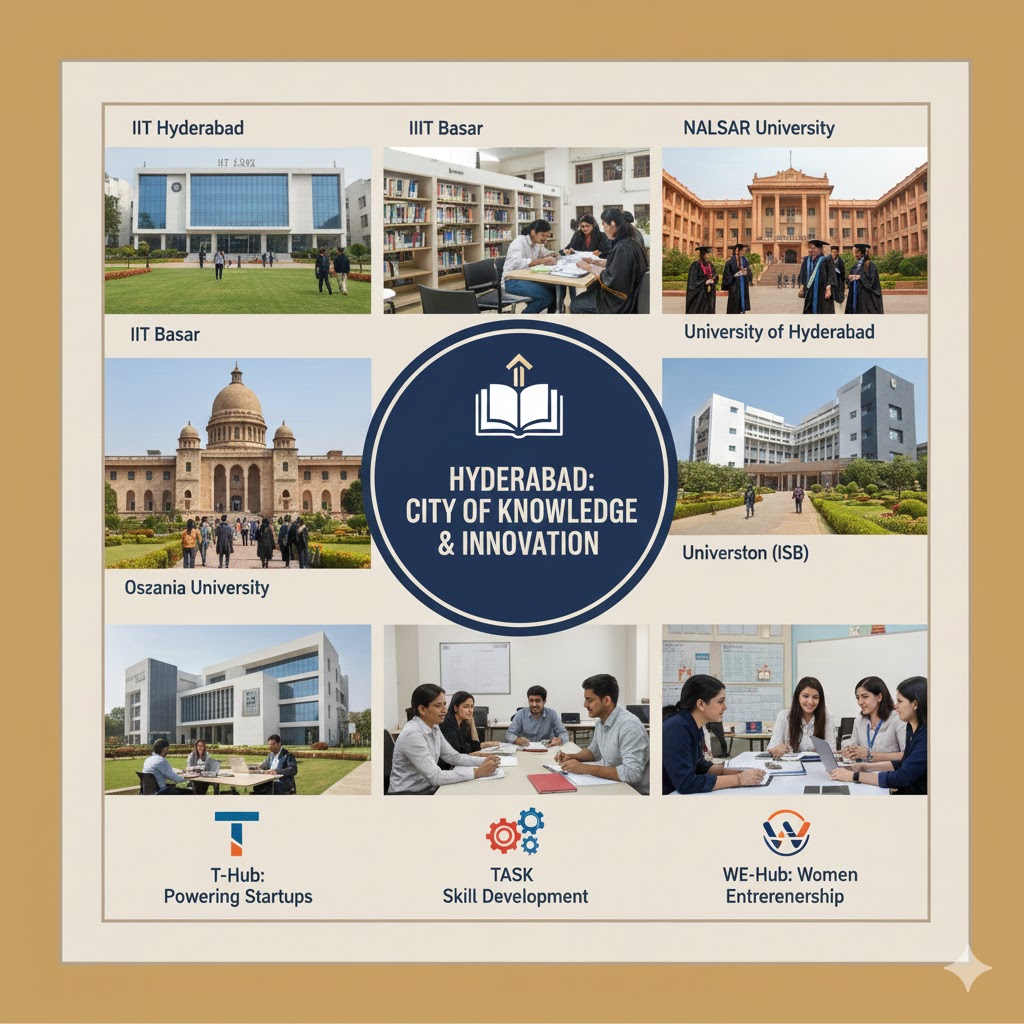
Hyderabad is referred to as the “City of Knowledge” and houses premier institutes:
IIT Hyderabad
IIIT Basar
NALSAR University
Osmania University
University of Hyderabad
Indian School of Business (ISB)
The state supports startups through T-Hub, TASK, and WE-Hub, promoting entrepreneurship and skill development. Hyderabad is widely celebrated as the “City of Knowledge” for its concentration of world-class academic and research institutions. The city hosts premier centres such as IIT Hyderabad, IIIT Basar, NALSAR University, Osmania University, the University of Hyderabad, and the Indian School of Business (ISB), which attract students, scholars, and professionals from across India and abroad. These institutions contribute to cutting-edge research, policy studies, technology development, and management excellence.
Tourism, Heritage & Spirituality
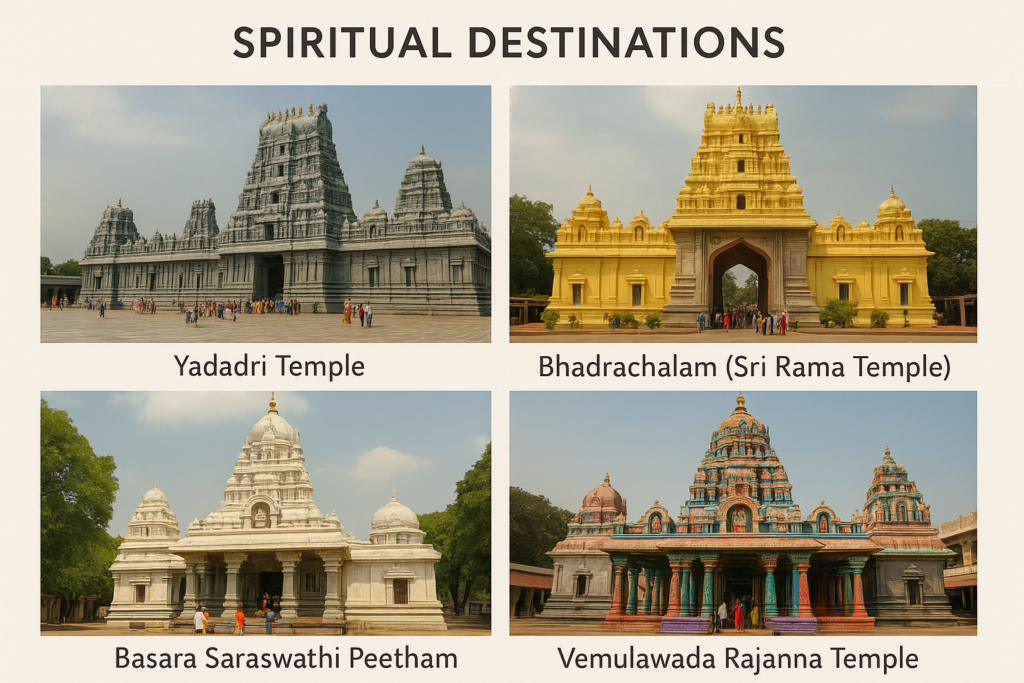
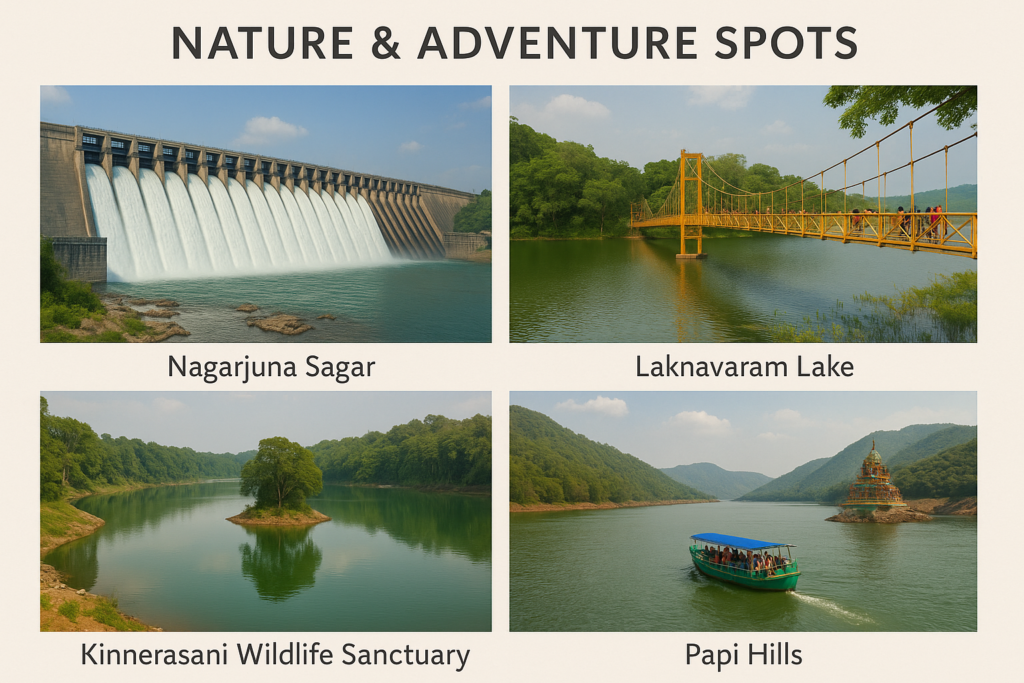
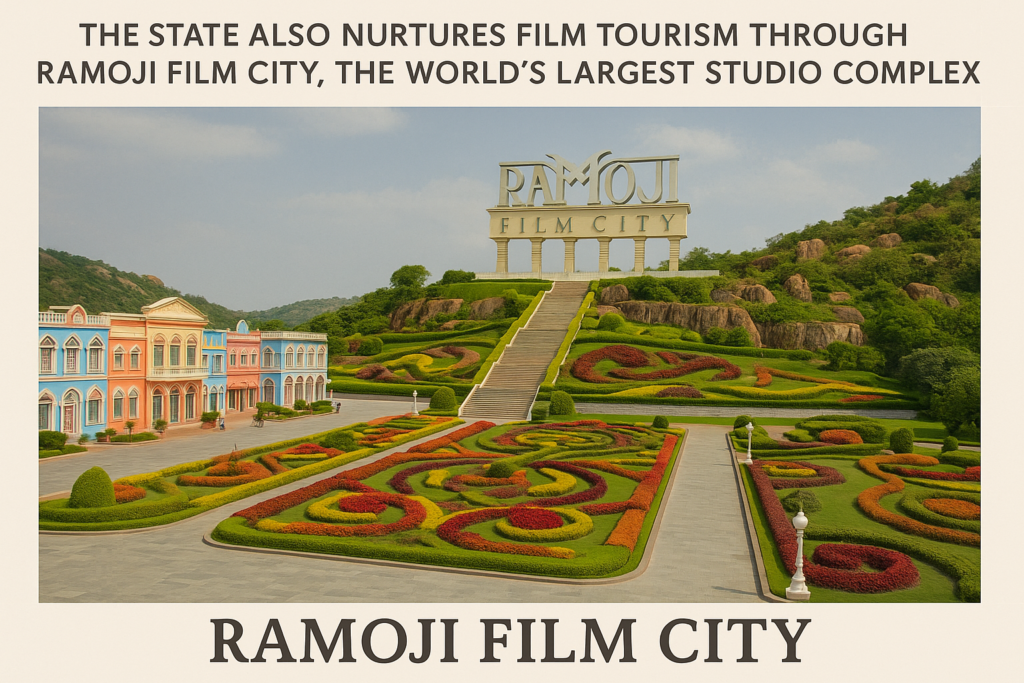
Telangana blends ancient spiritual heritage, architectural marvels, and eco-tourism
Art, Culture & Cuisine
Transport & Connectivity
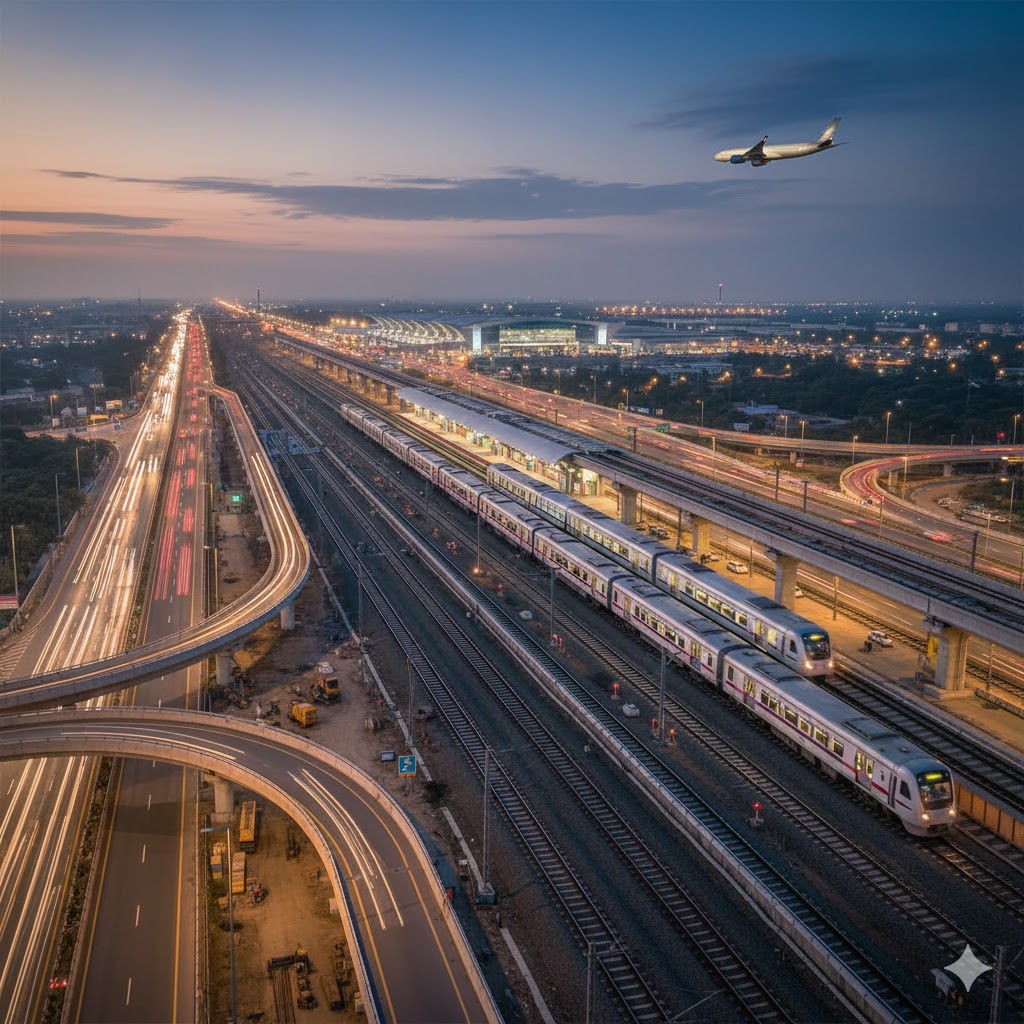
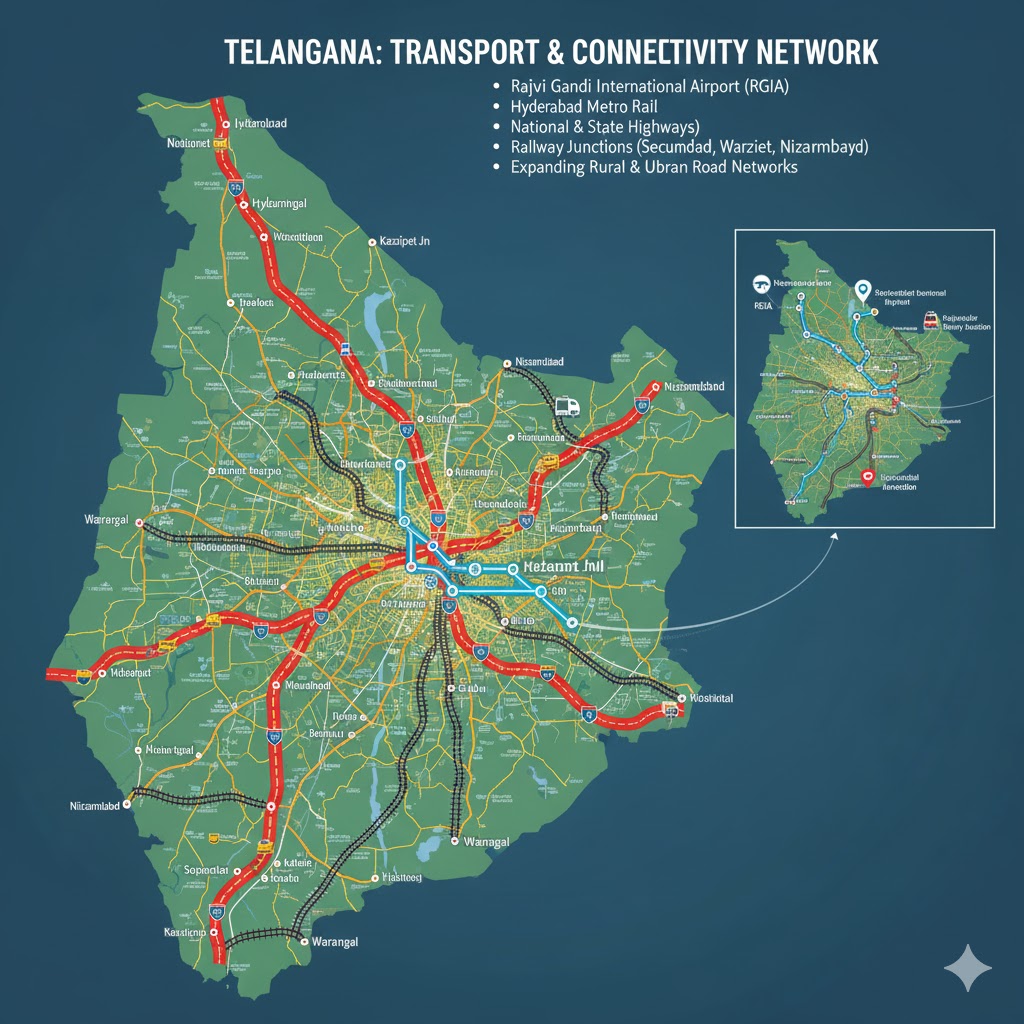
Telangana boasts excellent connectivity through:
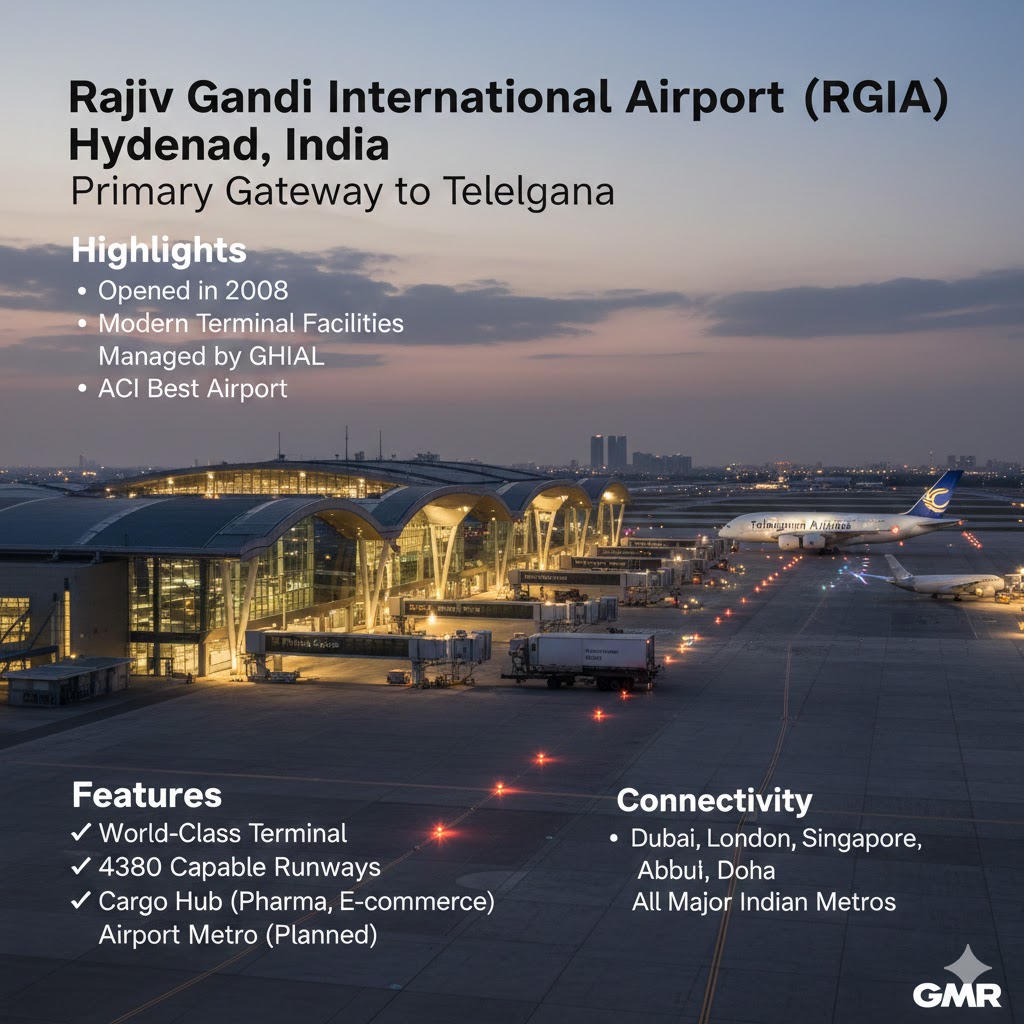
Rajiv Gandhi International Airport (RGIA)
Hyderabad Metro Rail
National and state highways
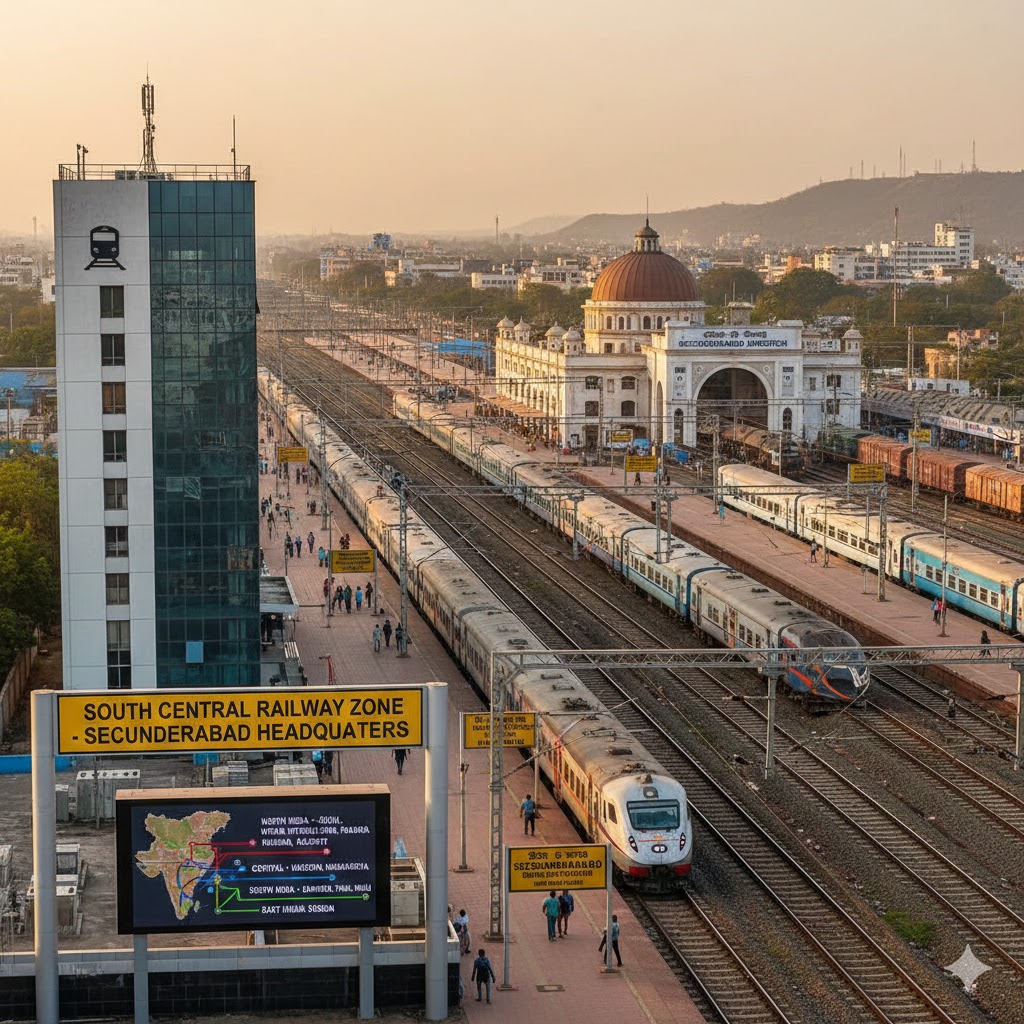
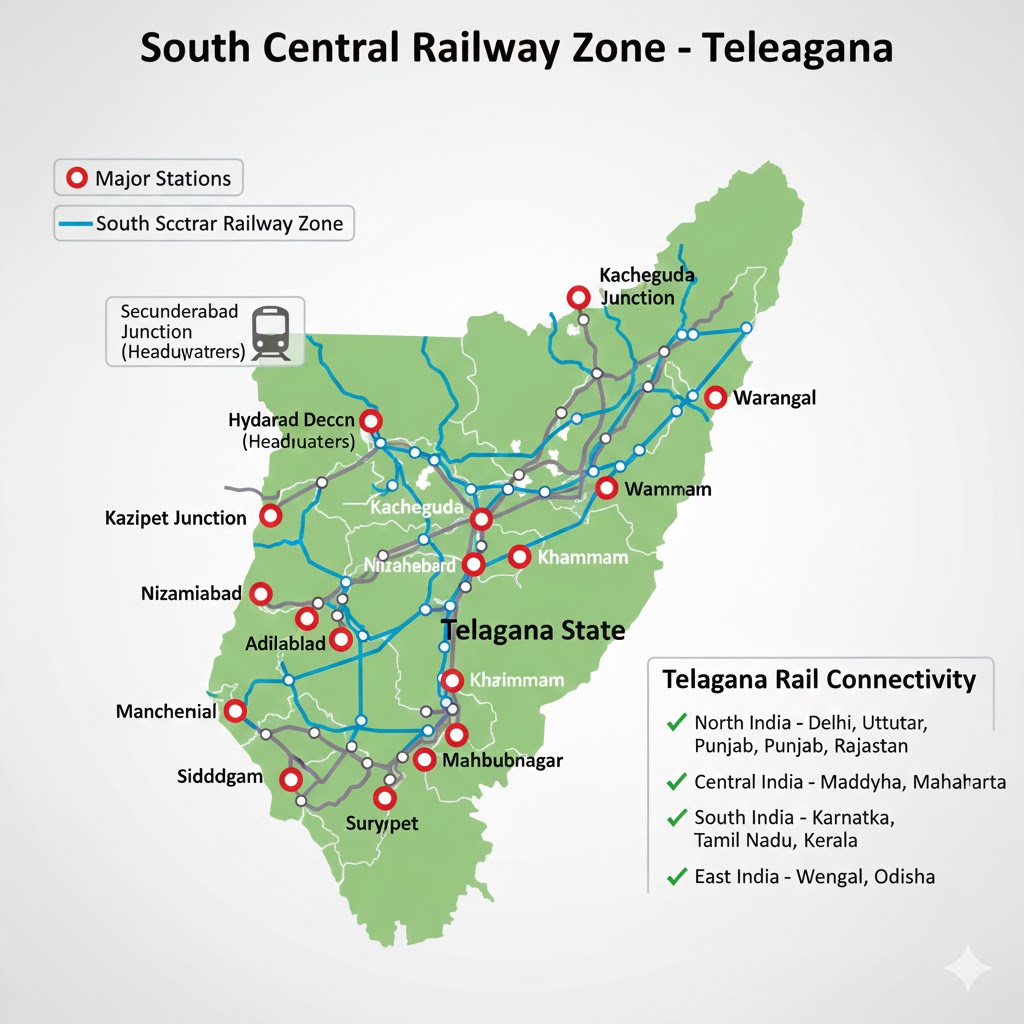
Railway junctions including Secunderabad, Warangal, Kazipet, Nizamabad
The state is steadily expanding rural and urban road networks.
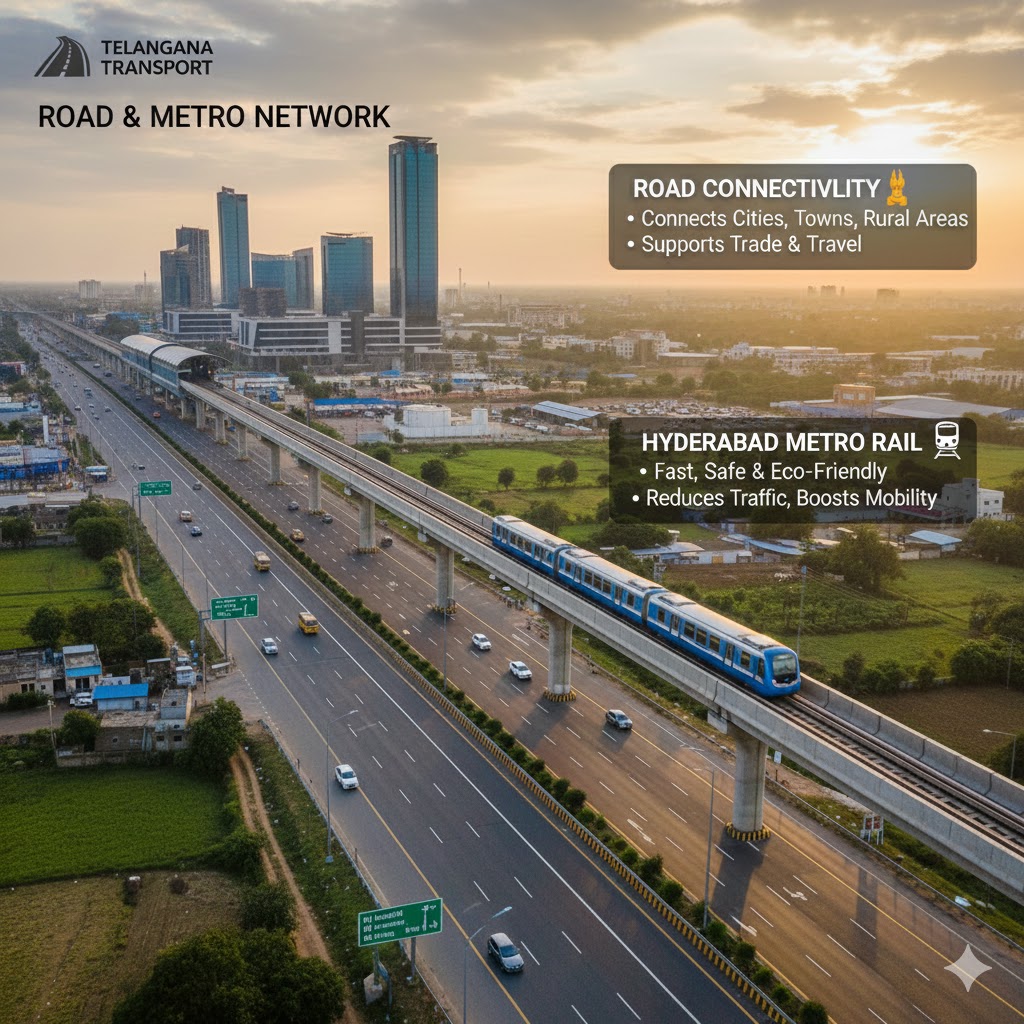
Road & Metro in Telangana
🚈 Hyderabad Metro Rail
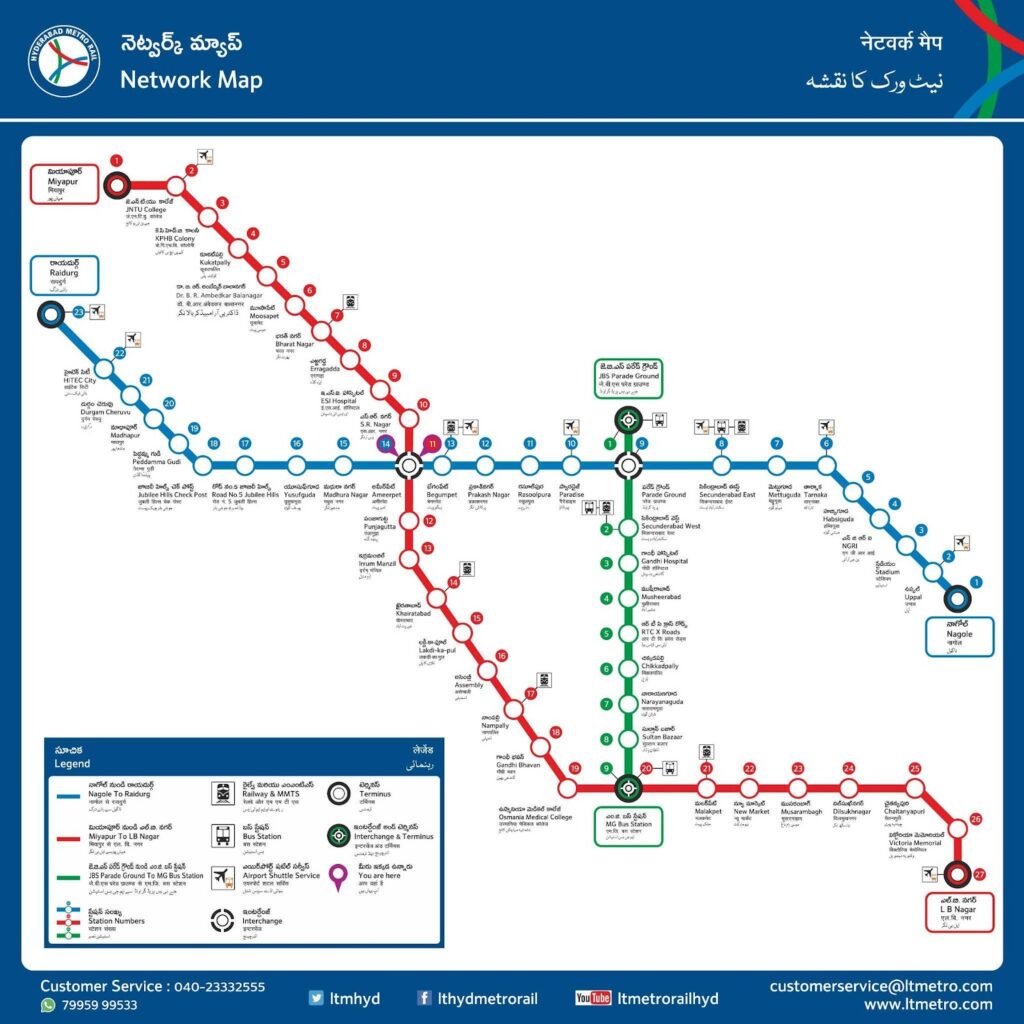
The Hyderabad Metro Rail is one of India’s largest metro rail projects, enhancing urban transport in the capital city.
Key features:
Modern elevated metro network across multiple corridors
Safe, fast, and eco-friendly travel option
Reduces road traffic congestion
Supports seamless movement for office workers, students, and daily commuters
The metro system connects major residential areas, IT hubs like HITEC City, commercial centers, and transit points, making Hyderabad a more connected and efficient urban destination.
Telangana Railway Network
Telangana State Airport Network
Telangana has a growing airport network that supports business, tourism, and international mobility. The state’s main aviation gateway is the Rajiv Gandhi International Airport (RGIA) in Hyderabad, one of India’s most advanced airports offering wide global connectivity, modern terminals, and major air cargo operations serving IT, pharma, and export sectors.
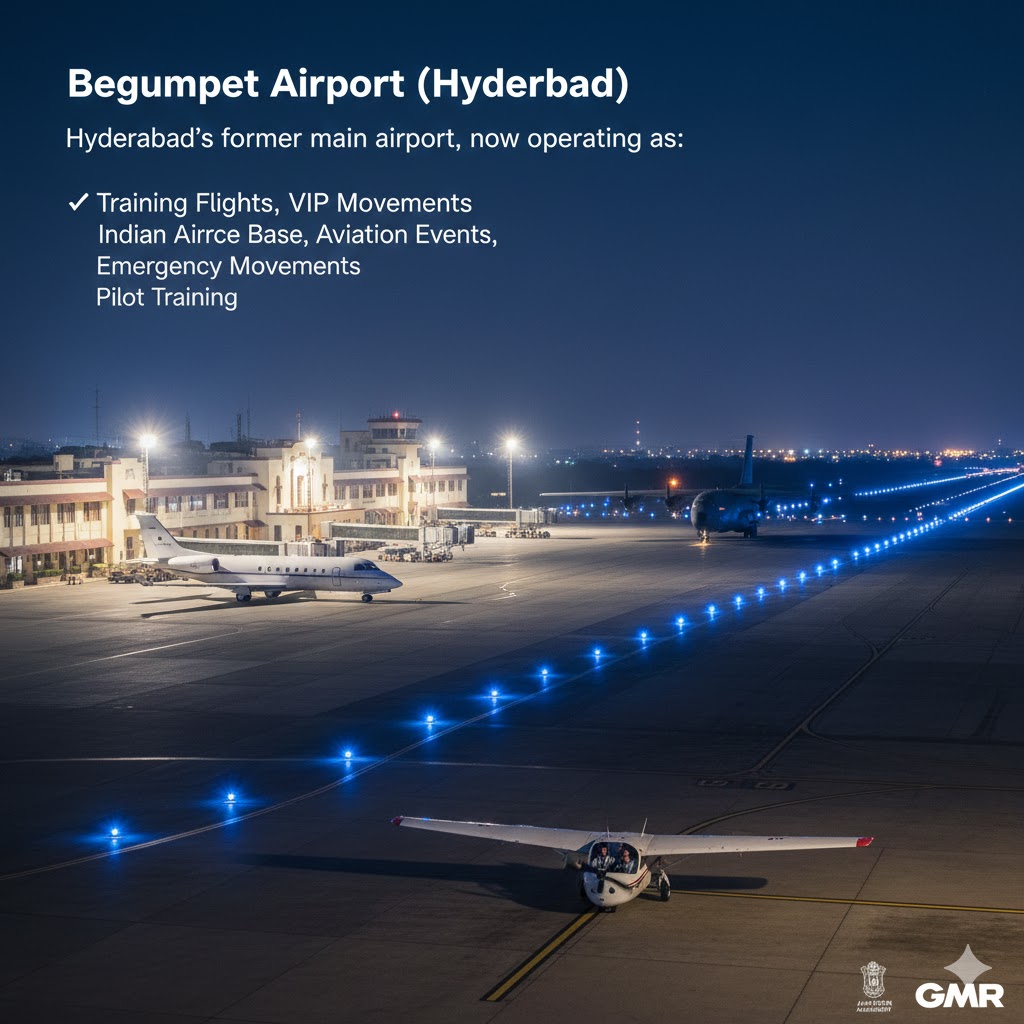
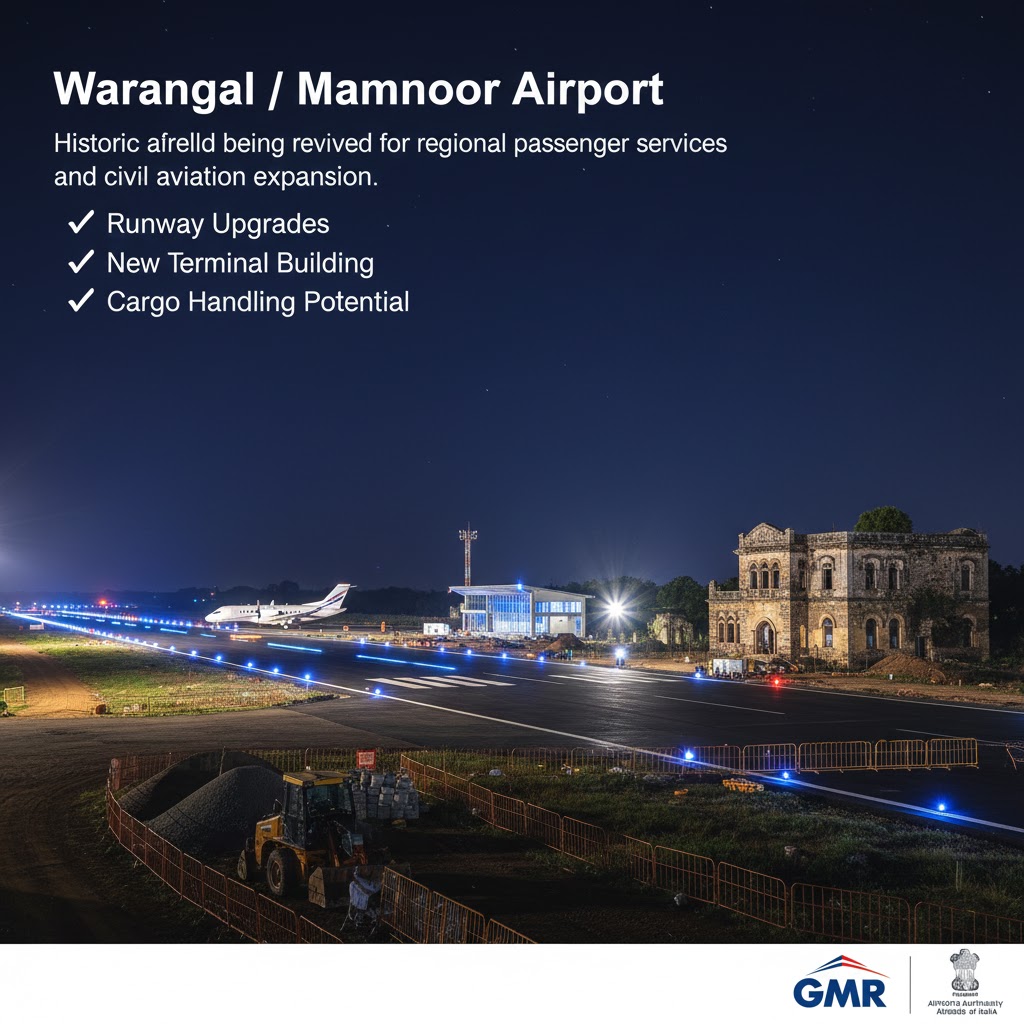
The Begumpet Airport in Hyderabad functions as a base for VIP flights, aviation training, and defense activities, while the historic Warangal (Mamnoor) Airport is being revived to serve North Telangana and boost regional travel and trade.
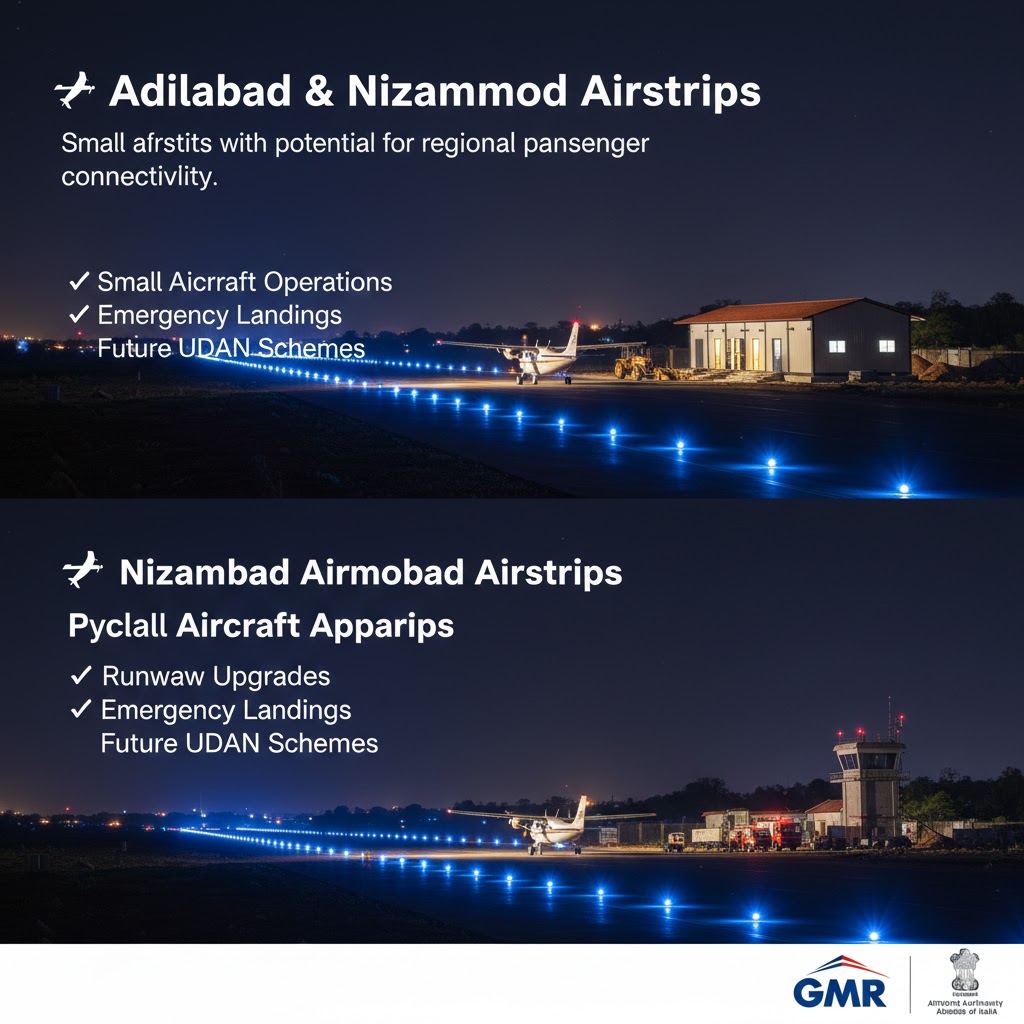
Telangana also has airstrips in Adilabad, Nizamabad, and Kothagudem with potential for expansion under the Government’s UDAN Regional Connectivity Scheme, aimed at improving air access for smaller cities.
With new airport development, planned metro links to RGIA, and increasing passenger traffic, Telangana is positioning itself as a major aviation, logistics, and business hub in South India.